The Fulfillment Application is designed for companies that incorporate fulfillment services.
Below you will find instructions needed to operate within FulfillmentApp:
- FulfillmentApp
- 1. Preparing Orders for Packing and Dispatch
- 2. Commissioning / Picking lists
- 3. Packing and Dispatching orders
- 4. Processing Returns
- 5. Warehouse Operations / stock visibility
- 6. Receiving Stock in the Warehouse
- 7. Delivery Notes
- 8. Analytics
- 9. Reports
- 10. Setup billing and issuing invoices
- 11. Adding new client to Fulfillment app
- 12. Fulfillment client - establishing connection to webshops / marketplaces
Fulfillment client - Live account for order status visibility, stock values, adding inbound orders
Fulfillment package includes separate/ secure Order management account for each clients ordering fulfillments services and FulfillfmentApp.
Order management account captures all online orders from various eCommerce platforms (WooCommerce, Shopify, Magento…) forwarded to fulfillment account if all conditions are met (stock, payment ..), allowing clients to track the order status until final delivery.
Order management app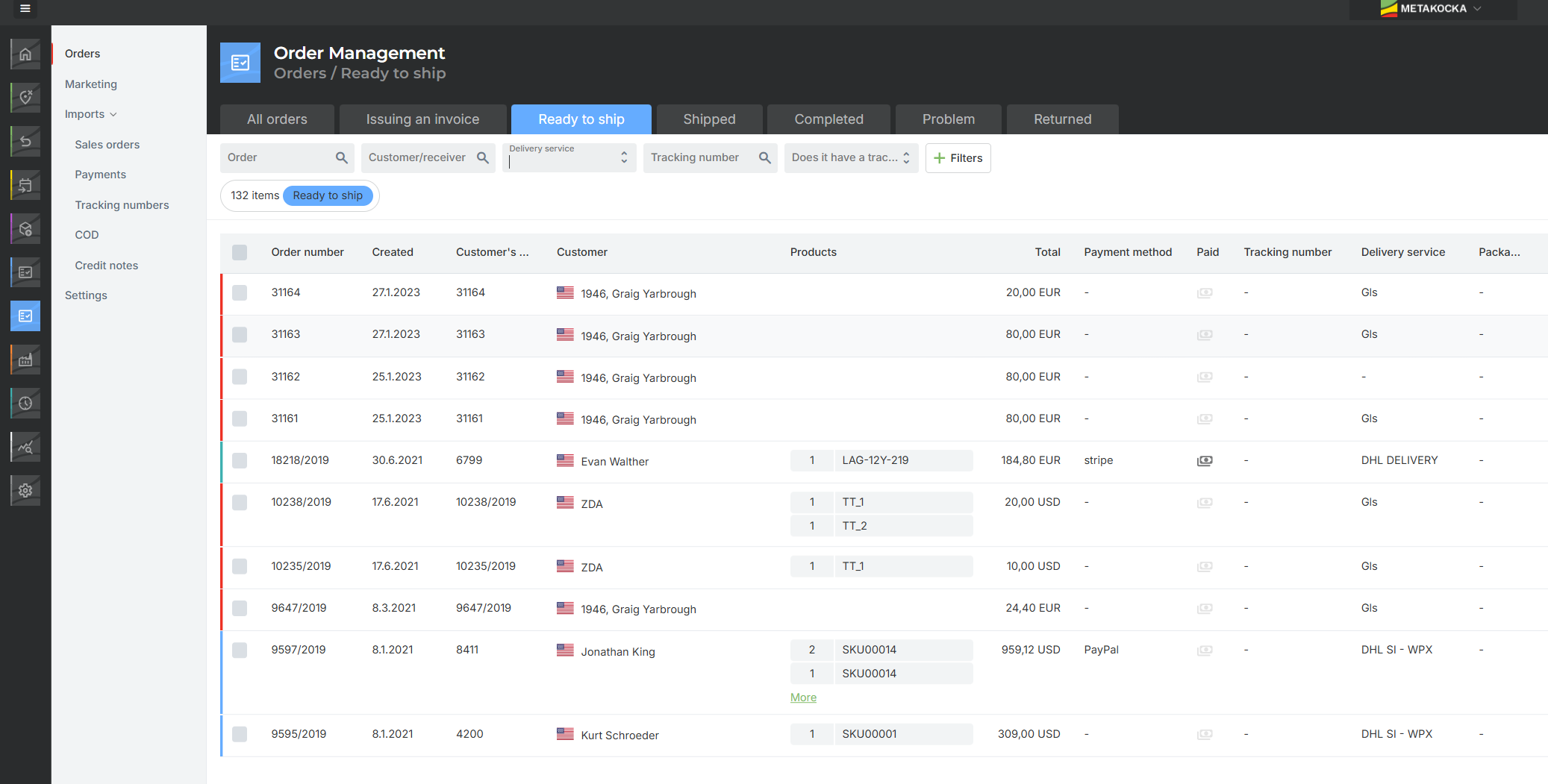
FulfillmentApp
1. Preparing Orders for Packing and Dispatch
After logging into FulfillmentApp account Navigate to the Dispatch/Ready to Ship list to find orders ready for preparing delivery service labels and packing.
Select the company for which the orders need to be processed, choose the desired orders, and click on Labels. Then, click the printer icon to generate parcel labels via API for the selected delivery service.

2. New window will open. The successfully generated labels can be downloaded by clicking the Download button or can be opened by clicking on Open button.
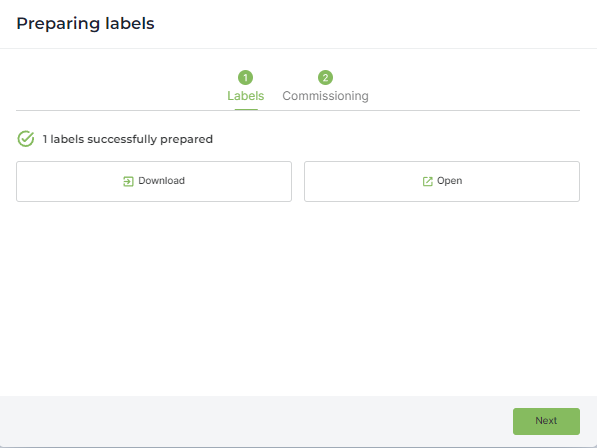
If an order contains errors ( wrong zip codes, missing data,...) , error will be displayed, and the order will be automatically moved to the Problem section where the error can be corrected.
Once an order in status "Problem" is corrected, change status to Ready to Ship, and it will be reprocessed for dispatching

2. Commissioning / Picking lists
Once labels are printed click "Confirm" and the Commissioning part of window will open (creating Picking lists).

Items belonging to the orders that successfully received labels will be added to the picking list. If the Send to Warehouse option is checked, the list will be displayed in the mobile scanner:
The active commissioning list will be visible on Mobile Scanner in the Mobile Warehouse App:

The warehouse operator will open the list, collect, scan, and mark the products, then confirm completion.

After new batch of label printing, a new picking list is created. If an active list already exists, a new list will be added as a draft and can later be sent to the warehouse as an active list.

If created as a draft, new commissionings can be added to the existing list during subsequent label printing.

Commissioning Statuses:
DRAFT: Not visible in the mobile app or accessible to warehouse staff.
ACTIVE: Visible in the mobile app.
COMPLETED: The warehouse staff has finished the commissioning process.

3. Packing and Dispatching orders
Delivery service labels created in the previous step, are now ready to be shipped using the Mobile Scanner. Before proceeding, log in via: Mobile Warehouse App
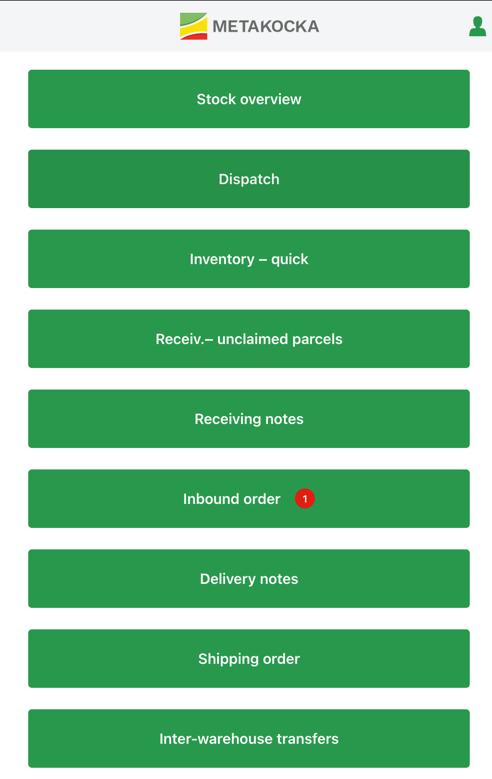
Click on the Dispatch in the Mobile Scanner.

2. Scan the label, to display the order details. Add the corresponding products to the package by scanning them or marking pre-packed items, then press Confirm.

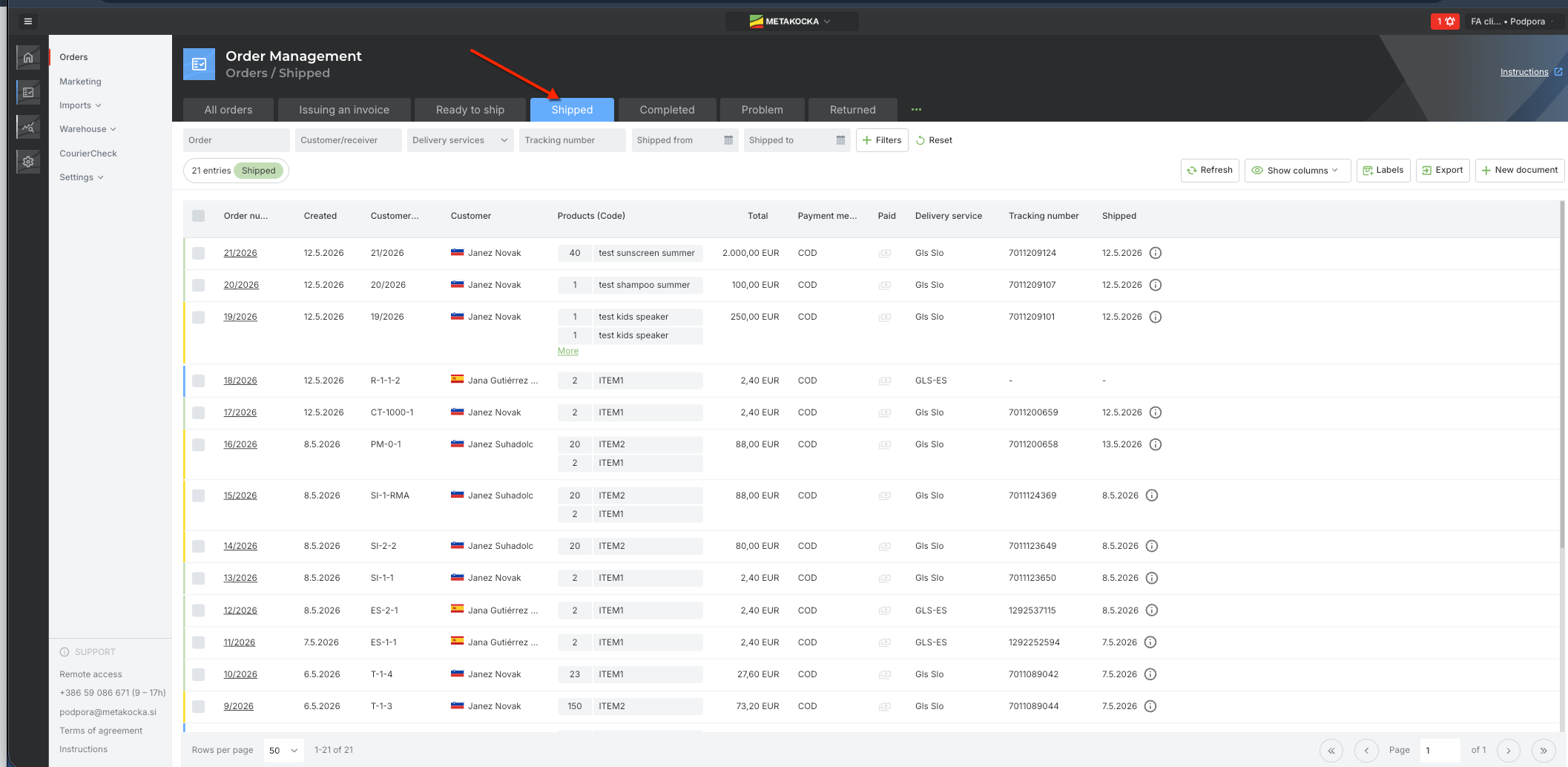
After confirmation, the order will be moved to the Shipped orders section in FulfillmentApp.

also in clients Order management - order will be marked as Shipped and will be visible in Shipped tab with added Shipping date
4. Processing Returns
Returned, undelivered, or unclaimed packages should be scanned under the Receiv. - Unclaimed Parcels tab in the Mobile Scanner.

Scan label to find order in return. Multiple packages can be scanned simultaneously.
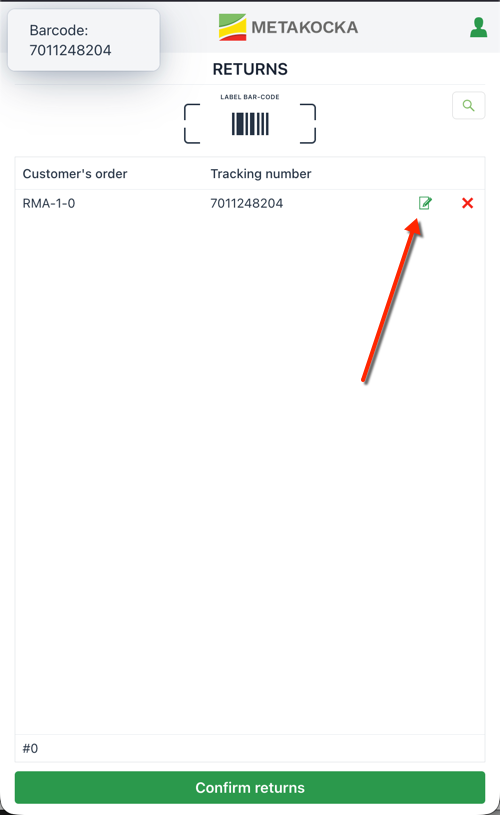
Click on "Edit" icon as shown above to see order content
Order content will be displayed.
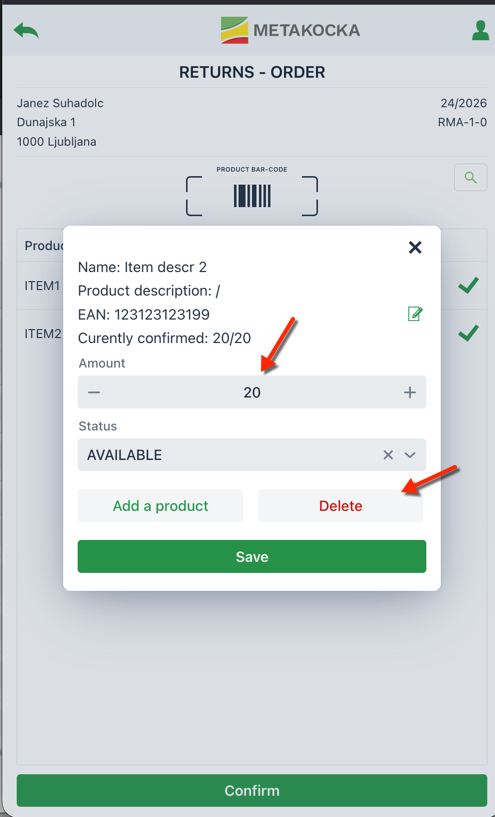
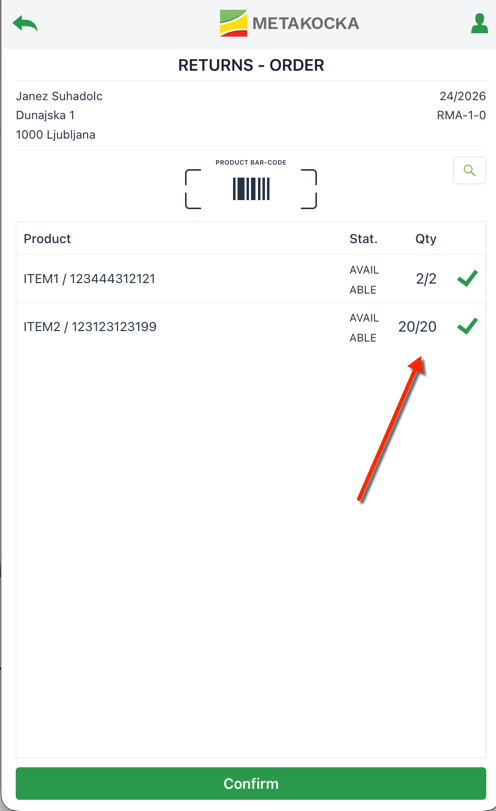 If only part of an order has been returned, click on specific item and adjust quantity or delete item that has not been returned
 If you deleted one item only what is returned will be displayed
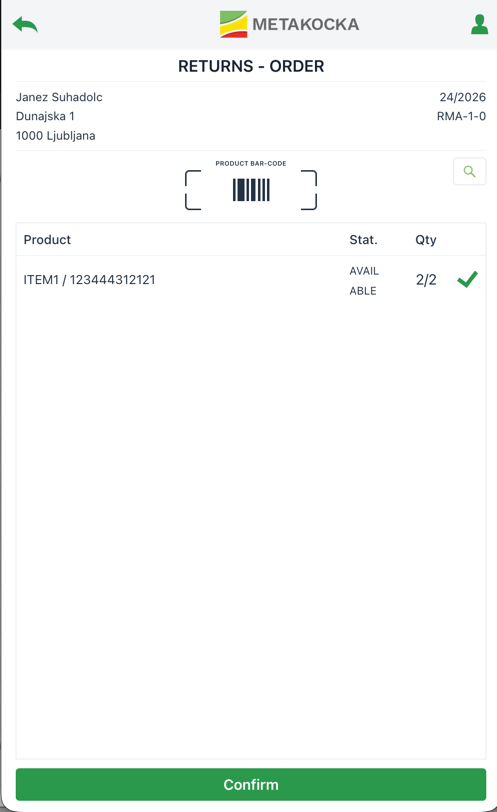
Once scanning / correction of what was returned is complete, select Confirm Returns to create Inbound order with items that will be returned to the stock in selected warehouse.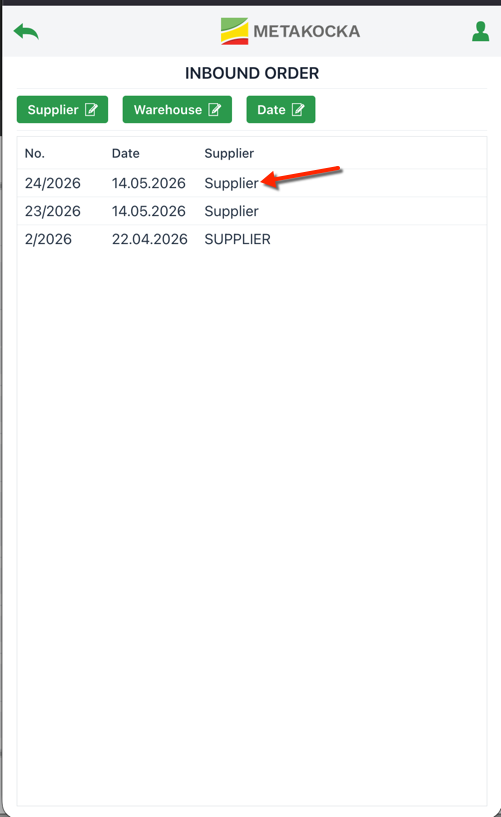
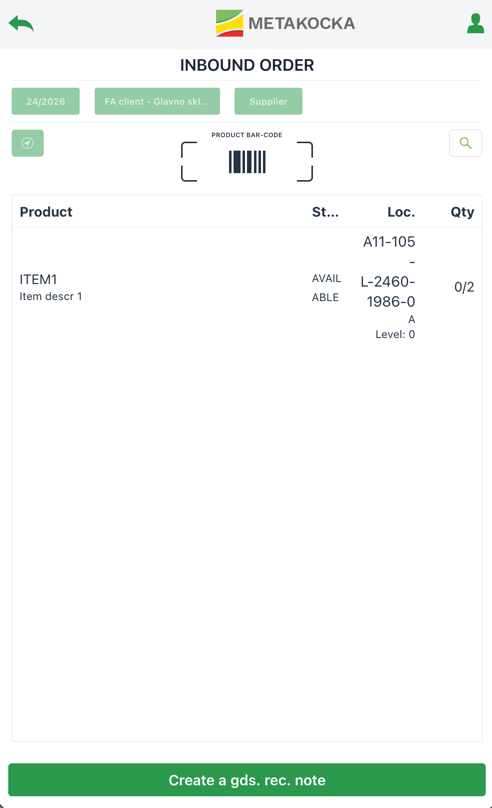
Change status / location if needed and create stock receipt.
5. Warehouse Operations / stock visibility
Good warehouse operations and support of warehouse processes are crucial for successful management and provision of fulfillment services.
In the Fulfillment application, an overview of the stock by companies for which the fulfillment service is provided is available.
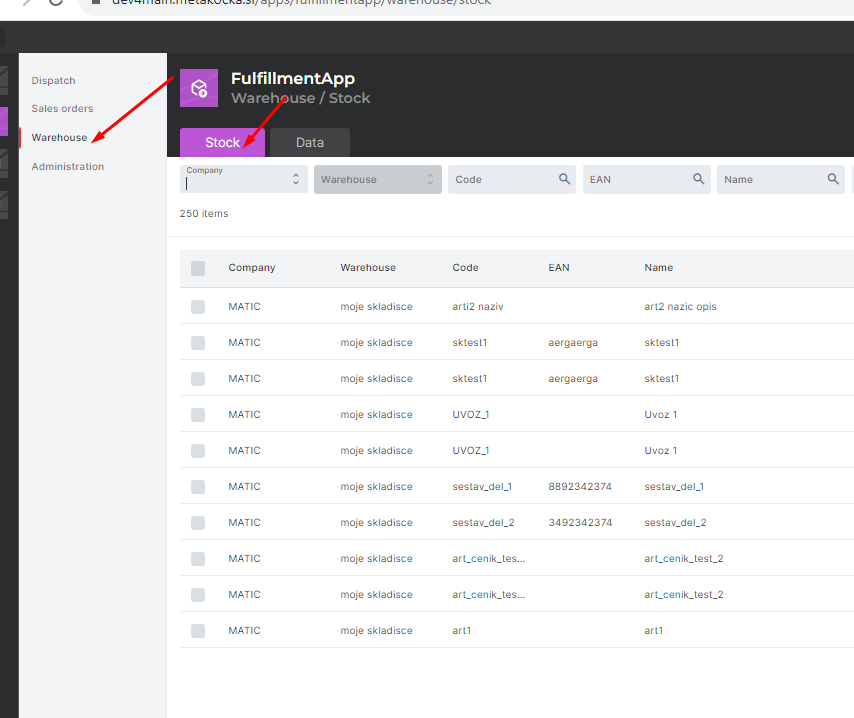
The product is shown in the warehouse with the following information:
- product code
- EAN code
- product name
- product location
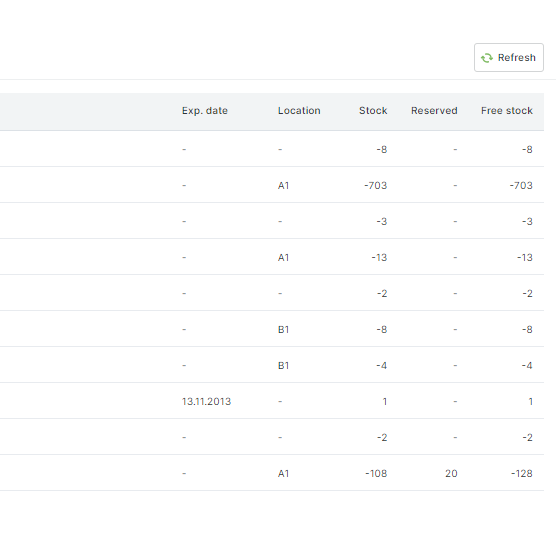
- Lot number if the product contains
- validity date if the article contains it
- Physical stock in the Fulfillment warehouse
- Reservations: how many orders/items are expected to be imported into the fulfillment application from the user's profile
- Free stock: how many items are still available for resale
6. Receiving Stock in the Warehouse
6.1. Receiving stock via inbound order
Fulfillment client can create inbound order with the listing of expected products.

These orders appear in the Inbound Orders section on the Mobile Scanner.

Click on the inbound order show in list, scan products, confirm quantities, and assign locations ( if stock status is enabled you can also assing stock status)


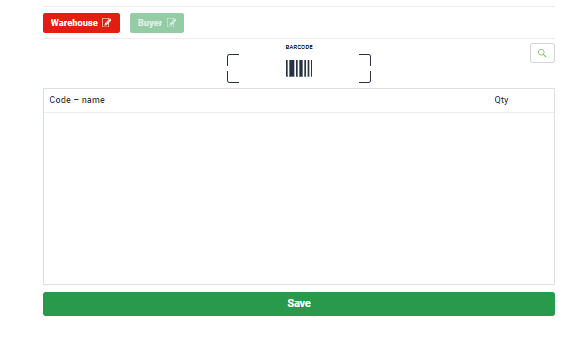
6.2. Receiving stock - Direct entry via Goods Received Notes ( no Inbound order)
On mobile Scanner select Gds. Rec. Notes.

Choose the company / warehouse and supplier.

Scan or manually select or scan ean code of the products and confirm quantities received

Click Save to update warehouse stock.

Created goods received notes are also visible in the application.
7. Delivery Notes
A Delivery Note records product write-offs due to various reasons (e.g., damaged items) or delivering goods without sales order ( sending goods back to B2B client)
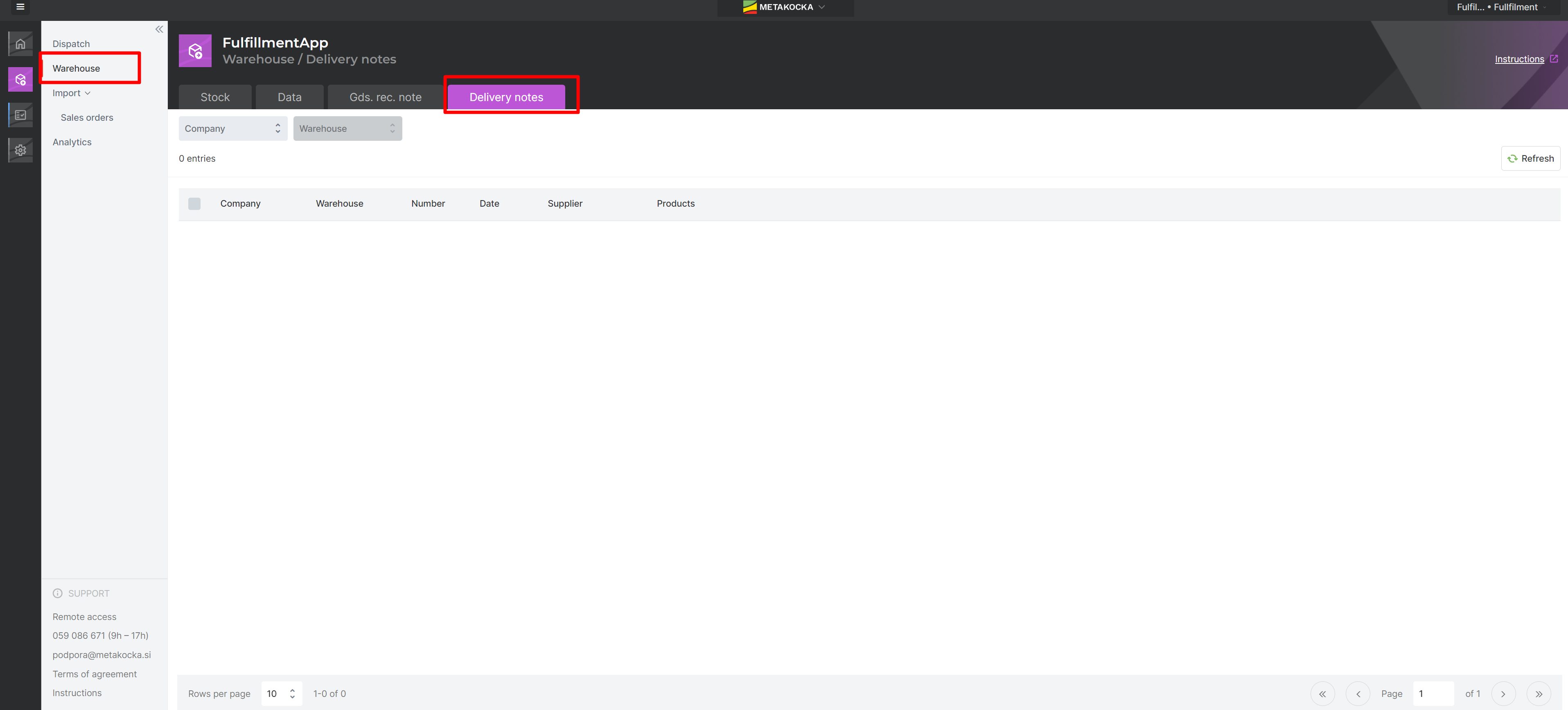
The created delivery notes are accessible in the Fulfillment Application.
8. Analytics
The Analytics module provides insights into order processing within the Fulfillment Application. ( New charts added periodically). More instructions / descriptions here
9. Reports
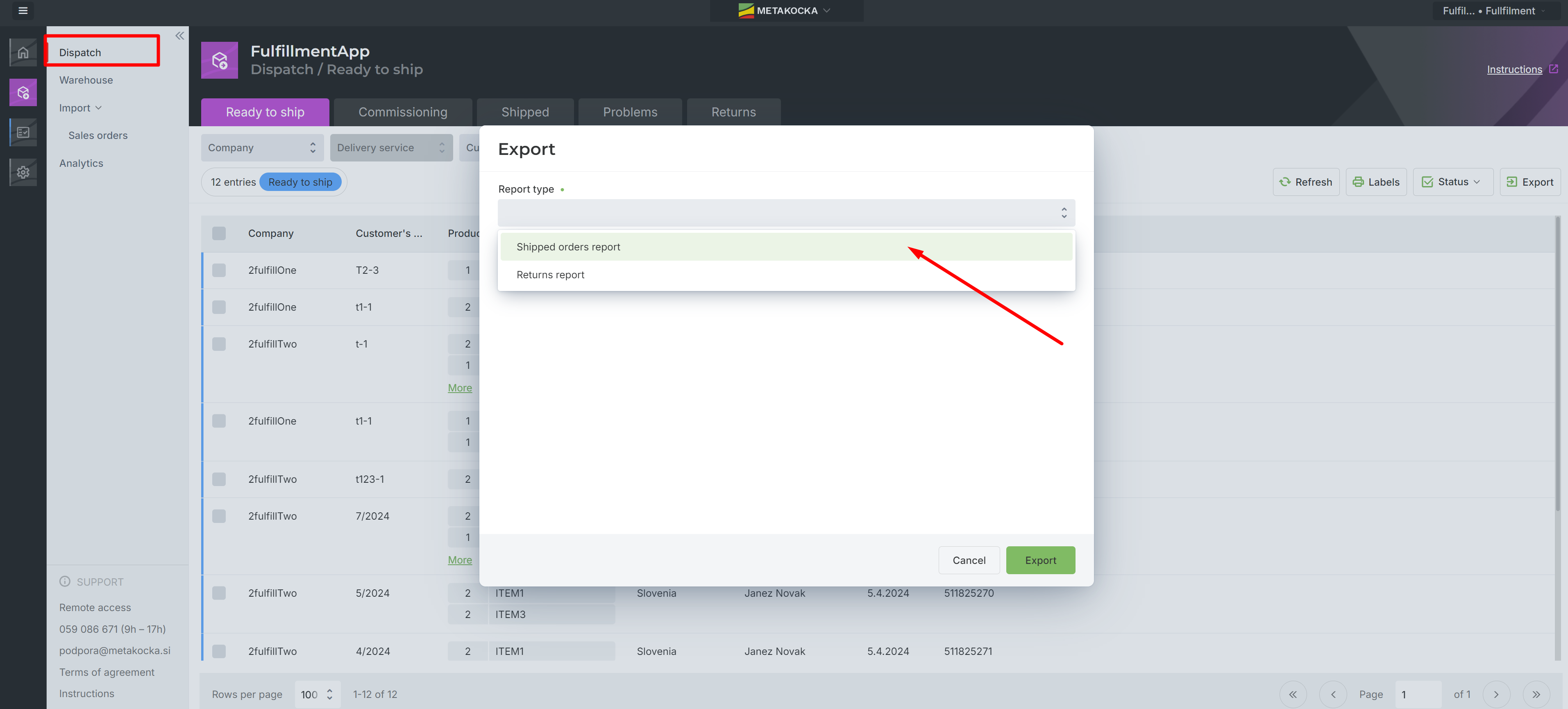
The Fulfillment Application also includes reports ( new added periodically) that serve as an overview and calculation basis for users of fulfillment services.
Available reports:
Orders Sent: Contains details of shipped orders and their products within a specific period.
Returns: Provides data on processed returns within a selected timeframe.
10. Setup billing and issuing invoices
Follow Instructions described here
11. Adding new client to Fulfillment app
Follow Instructions described here
12. Fulfillment client - establishing connection to webshops / marketplaces
Follow Instructions described here
Was this article helpful?
That’s Great!
Thank you for your feedback
Sorry! We couldn't be helpful
Thank you for your feedback
Feedback sent
We appreciate your effort and will try to fix the article